Showing posts with label John Kerry. Show all posts

Tuesday, November 8, 2016

London meeting shows support for Libyan Government of National Accord

(Octoberj 31) In London, U.S. Secretary of State, John Kerry met with the Libyan Prime Minister Faiez Serraj, U.K. Foreign Secretary Boris Johnson, representatives from Italy, UAE, France, and Martin Kobler, UN Special Representative of the Secretary General (SSRG)

The group met to discuss efforts to support the UN-brokered Libyan Government of National Accord(GNA). Among the problems facing the GNA is an acute cash shortage with PM Faiez Serraj trading charges of blame with the Central Bank Governor Sadiq al-Kabir. In spite of oil production almost having doubled since the NOC was able to begin exports again after eastern commander Khalifa Haftar seized four key export ports, the financial crisis has not eased. As Reuters describes the situation: "A meeting convened by Britain and the United States in London on Monday is seen as a last-ditch effort to get Seraj and Kabir to work together and save Libya's economy from deeper failure."
The GNA faces not only a cash shortage but spiraling inflation and constant security problems as well. There has been no progress in getting the rival House of Representatives(HoR) government or its military commander Field Marshal Khalifa Haftar to approve the GNA. As an example of the frightful financial situation, Milad Lahmar, a physiotherapist with four children had not been paid his salary for nearly four months. Outside of a bank in Tripoli he said: "I have been waiting since dawn in front of the bank in a desperate attempt to get some cash." Wahda Bank, which is one of largest in the country said on Sunday that it would have no funds until further notice.
Libya is quite dependent on oil earnings through sales by the National Oil Company (NOC). The Central Bank receives all the earnings. It appears that the system is simply not functioning because relations between Serraj and Kabir appear to have gone sour and there is deadlock. The finance minister of the GNA has not taken up his post to make matters worse. While Kabir's mandate ran out in late last September under the GNA, the HoR has to approve any new Central Bank head.
Serraj has accused Kabir of not acting on calls to provide credit and release foreign currency saying: "We have exhausted our efforts ... with al-Kabir. Once again, his response was weak and sometimes non-existent." In response Kabir complained the Serraj's Presidency Council (PC) had come up with "loose proposals", which included devaluing the Libyan dinar and selling off "non-existent" U.S. dollars: "The Presidential Council did not submit any realistic, executive programs to be carried out on the ground."
Foreign exchange reserves three years ago were above $100 billion but are expected to be just $43 billion by the end of this year. On the informal exchange market the Libyan dinar fell to a new low of 5.25 to the U.S. dollar. Food prices have risen 31 percent in the first half of this year according to World Bank figures. According to economists the Libyan liquidity crisis will not be resolved until there is better security and trust in the banking system. The delivery of large amounts of new banknotes both from the U.K. and Russia appears not to have been much help. Residents of Tripoli complain that even though 800 million dinars arrived recently only the powerful have any quick access to funds.
The World Bank has said that the Libyan economy is near collapse. The Guardian speaks of the IMF and the World Bank as well as Kerry and Boris Johnson urging Serraj to carry out drastic reforms. Serraj was urged to mend fences with Kabir so as to cooperate in alleviating the situation.
However, the GNA is simply not meeting the basic needs of the population and is losing support. The GNA does not even have the power to dislodge the so-called Salvation government that took over the headquarters of the GNA's own High State Council in an attempted coup. The Presidential Guard, tasked with defending the GNA, has even defected to the coup plotters. The rival House of Representatives (HoR) government in the east is becoming militarized as Field Marshall Haftar replaces civilian mayors and other officials by military leaders. He now also has troops at crucial oil fields and export ports. There are reports that the UAE now operates out of an eastern air base to support Haftar.
The situation in Tripoli is dire. As the Guardian puts it: "With the GNA unable to form a security force of its own, Tripoli is at the mercy of warring militias, with murders, kidnappings and firefights a daily occurrence." Jalel Harchaoui, a Libya analyst at the University of Paris claimed: “Several measures must be taken simultaneously, a high level of coordination is required, but confidence in the banking system has evaporated.”
Boris Johnson the U.K. Foreign Secretary said:There is strong international support for the Government of National Accord (GNA), internationally recognised as the sole legitimate government of Libya, to succeed and the situation in Libya has implications not just for regional stability, but also for the U.K. Building a safe, secure and prosperous Libya that is able to confidently tackle the challenges in the region is in all of our interests. It is now imperative that the GNA makes swift progress on delivering public services: electricity in homes and cash in banks, for the benefit of all Libyans.
A statement from the U.S. government makes some of the same points. It also makes references to technical talks that are to follow in an attempt to further efforts to deal with Libya's financial problems:The ministers also emphasized the international community's ‎commitment to providing the Government of National Accord technical, economic, humanitarian, security and counter-terrorism assistance. They also emphasized the importance of the GNA moving forward with its work to form a new cabinet proposal that represents all parts of Libya.
It is not clear how the HoR government and Haftar are to be brought to support the GNA. There are no new ideas as to how to solve the political crisis facing the GNA. Until that is solved economic problems are likely to remain. Indeed with Haftar's seizure of the oil ports and oil fields in the east and also control of main oil fields in the west by allies of Haftar, the GNA is in an ever weakening situation. It is over two months since the last GNA was voted down by the HoR. There is no sign yet that there is any agreement on a new cabinet let alone one that the HoR will approve.

Friday, September 30, 2016

Were there deliberate attempts to sabotage the Russian US peace deal?

The recent ceasefire negotiated by John Kerry, the US Secretary of State, and Sergei Lavrov, the Russian Foreign Minister, created tension between the U.S. Pentagon and the Department of State.

Many in the U.S. military are quite distrustful of Russia. Ironically, apart from some violations of the ceasefire by both sides, the bombing of Syrian forces at Deir ez-Zor that killed over 60 Assad forces and allowed the Islamic State to temporarily seize a key hill overlooking the airport held by the Assad government was the first very serious challenge to the ceasefire. The U.S. claimed that the attacks were a mistake but many Russian sources immediately accused the U.S. of deliberately attacking the troops because they oppose the Assad government to such a degree that they are even willing to help the Islamic State against Assad forces.
The situation was not helped by the subsequent Security Council meeting in which the U.S. envoy to the UN called the Russian call for an emergency meeting a "stunt'. Instead of trying to calm the situation both sides seemed to determined to exacerbate tensions. Kerry and Lavrov had worked hard against the odds to arrive at the ceasefire in the first place. Both sides have trouble controlling parties on each side who did not really want the ceasefire in the first place. While the attacks may have been an honest mistake, they also could have been an attempt to sabotage the ceasefire while hurting Assad.
The next serious event was an attack on an aid convoy. A Guardian report, along with many others, describes the attacks as airstrikes. The report blamed Russia for the attack whether Russian planes were involved or not, as Russia was responsible under the ceasefire agreement for keeping Assad's forces in line. Yet it is not clear that the convoys were subject to air attacks.
Al Arabiya reports:The United Nations on Tuesday has backtracked and amended its language when it said that the aid convoy in Syria’s Aleppo was “attacked” instead of it being targeted through “air strikes,” a spokesman said. “We are not in position to determine whether these were in fact air strikes,” the spokesman added.
The Russian Defense Ministry claimed that the White Helmets defense rescue group it says were close to the former Nusra Front could answer who was responsible and why. The ministry also later said that drone footage showed the aid convoy was accompanied by pickup truck of militants with heavy mortar gun. Presumably they were there to guard the shipment, but then these days who knows? On the face of it, it is not clear that either side gains by the attack unless they wanted the cease-fire to be sabotaged.
After the attack, the Red Cross suspended all convoys on Tuesday. An opposition activist said that the attack destroyed at least eight vehicles along with the Red Crescent regional aid depot. At least 12 people were killed according to the Syrian Observatory for Human Rights and opposition activists. For some reason mainstream sources often cite the Syrian Observatory for Human Rights even though it is run by one person out of the U.K. although he has many contacts in Syria. U.S. officials say that unlike the U.S. attack on Assad, which was a mistake, there could be no similar excuse from Russia since the destination of the convoy was known to both Russia and the Syrian regime. No mention has been made by the officials that there is any question about whether there was an air attack.
Whether or not, the U.S. attack on Assad troops or the attack on the aid convoy were deliberately planned to sabotage the ceasefire, they effectively did so. Kerry has said that the Syrian ceasefire is not dead after talks with Russia and other powers with a stake in the civil war. He also said there would be talks later this week. Meanwhile the battle rages on with Aleppo under constant attack.


Read more: http://www.digitaljournal.com/news/politics/op-ed-were-there-deliberate-attempts-to-wreck-the-syrian-peace-deal/article/475315#ixzz4LnFXzE7x

Friday, September 23, 2016

US Russia cease fire agreement caused tension between State Dept. and Pentagon

The deal between Secretary of State John Kerry negotiated with Russia for a ceasefire in Syria has increased the tension between Kerry and Defense Secretary Ashton Carter.

The cease-fire agreement took effect at sundown last Monday. Although violence has been reduced, there have been a number of violations and problems. The situation was not improved by Assad saying he intended to recapture all areas of Syria.
Carter had been one of several administration officials who argued against the agreement in a conference call with the White House that included Kerry. President Obama eventually approved the agreement after a long debate. However, Pentagon officials were not convinced. Pentagon officials would not even agree to the proposal that if violence ceases for a week, the next day the U.S. and Russia would share information on Islamic State targets in Syria. Lt. Gen. Jeffrey Harrigian, commander of the United State Air Forces Central Command said: “I’m not saying yes or no. It would be premature to say that we’re going to jump right into it.” However even the White House press secretary expressed doubts: “I think we’d have some reasons to be skeptical that the Russians are able or are willing to implement the arrangement consistent with the way it’s been described. But we’ll see.”
Kerry wants the U.S. to do everything possible to keep Assad from bombing civilians. He hopes that the agreement will keep Assad from such bombings. Kerry has had success dealing with the Russians before. Just two years ago on Sept. 14 he negotiated a surprise agreement with Sergei Lavrov to eliminate Assad's chemical weapons. The agreement does not include chlorine which appears to have been used recently. Kerry was also successful in negotiation of a nuclear deal with Iran against much opposition from many U.S. politicians However, in spite of many attempts, he failed to revive Middle East peace talks.
Apparently Kerry himself believes the deal may not work but he is determined to try anyway because it is so important to relieve some of the suffering and stop the violence that has taken about half a million lives already. The problem is that neither side may be able to adequately control Assad or some of the rebel groups. Already, UN trucks with aid for Aleppo were stuck at the Turkish border awaiting permission from the Assad government to enter Syria.
Kerry's positive negotiations and cooperation with Russia are happening in a climate in which the U.S., especially the military, takes a very combative stand against Russia on issues such as Crimea and the rebels fighting in eastern Ukraine. The U.S. military is not vey anxious to share intelligence with a country that it increasingly considers an adversary.
Gen. Philip Breedlove, who was until recently NATO's supreme allied commander said:“I remain skeptical about anything to do with the Russians. There are a lot of concerns about putting out there where our folks are.” A measure of the sensitivity of the agreement is that the State Department has not released the text of the agreement or even a fact sheet summarizing it.
It remains to be seen whether the cease-fire holds for seven days. No doubt there will be numerous violations even if it holds. If both sides agree the cease-fire held then the U.S. and Russia are to begin to share intelligence on targeting the Islamic State and Jabhat Fateh al-Sham, formerly the Al-Qaeda-linked Al-Nusra Front. The U.S. military worries that any such sharing would reveal information about U.S. tactics and intelligence gathering methods.


Friday, July 22, 2016

Russia and US to increase cooperation in Syria

John Kerry U.S. Secretary of State said on July 15 that Russia and the U.S. had agreed to cooperate in Syria against the Al-Qaeda-linked Nusra Front.

 1 of 2 
Kerry said the cooperation was intended to "restore the cessation of hostilities, significantly reduce the violence and help create the space for a genuine and credible political transition." Kerry appeared alongside his Russian counterpart Sergei Lavrov in Moscow. Kerry did not give any details as to what exactly had been agreed upon.
. The decision to have greater military cooperation with Russia is causing divisions within the US government, with the Pentagon challenging the view that Russia could be trusted to fulfill its part of any agreement. Kerry's statement appeared to reflect awareness of this skepticism as he said: "I want to emphasize, though, they are not based on trust. They define specific, sequential responsibilities all parties to the conflict must assume with the intent of stopping all together the indiscriminate bombing of the Assad regime and stepping up our efforts against al Nusra."
CNN has obtained a draft of the proposed agreement which would allow targeting and carrying out joint airstrikes against both the Islamic State and also the Nusra Front. CNN claims that the agreement does not necessarily apply to attacks on ISIS, as each country would reserve the right to attack the Islamic State independently. As part of the agreement the Assad air force would be largely grounded except in certain circumstances.
Pentagon Press Secretary, Peter Cook, told reporters: "The secretary of defense has been clear that he has been skeptical of Russia's activities in Syria and we have reason for that. There's plenty of reasons for that skepticism, And I think he maintains that skepticism." The Defense Department would like to see guarantees that Russia will keep its end of the bargain.
As reported in Sputniknews, an article in the German newspaper Sueddeutsche Zeitung, claims the new agreement could involve a reset in relations between Russia and the US, and an "arms brotherhood" in the battle against terrorism. The article claims: "The fact that President Barack Obama gradually gives up his original goal — the overthrow of Assad, and gives priority to the fight against Islamic State has become noticeable long ago. The planned new partnership with Moscow would consolidate this course" Moscow has long been seeking such military cooperation with the US in Syria. The new development has resulted in Russian media replacing criticism of Obma by describing him as a new partner of Russia in Syria. In early July, Russian president Putin said that Western states were partners in the fight against terrorism, and that Russia wanted to work closely with the US on international issues. Kerry visited Moscow on July 14 and 15 with the US offer of cooperation. The meeting also discussed the sharing of intelligence data on terrorism. Detailed discussion of the offer can be found in an article in the Washington Post.


Monday, June 20, 2016

Over 50 US State Dept. diplomats want US to strike Assad forces in Syria

More than 50 U.S. State Department diplomats signed an internal memo that is critical of the Obama administration policy in Syria.

In the memo, the diplomats urge Obama to carry out military strikes against the forces of President Bashar al-Assad to stop what the diplomats claim are persistent violations of the cease-fire in the civil war that has lasted five years already.

A draft of the memo was obtained by the New York Times from a State Department official.

The draft claims that U.S. policy has been "overwhelmed" by unrelenting violence in Syria and calls for "a more judicious use of stand-off and air weapons which would undergird and drive a more focused and hard-nosed U.S.-led diplomatic process."

Such a move would no doubt result in an increased confrontation with Russia and would represent a radical shift in U.S. policy which is at present emphasizing the battle against the Islamic State rather than the overthrow of the Assad regime. However, diplomatic attempts to end the conflict led by Secretary of State, John Kerry are on the verge of collapse.

The dissent was filed  in the State Department "dissent channel". The channel was set up during the Vietnam War so that employees could register disagreements with policies without any fear of reprisal. Filings are relatively common but this dissent has an unusually high number of signatures. The signatures on the filing are almost all of mid-level working officials. There are no well-known higher officials on the list but it is known that many share the concerns expressed in the dissent.

Kerry himself has suggested there be a stronger U.S. response in Syria to force Assad into a diplomatic solution. Obama has resisted such pressure and been backed up by military commanders who fear the result should Assad lose power. John Kirby, the State Department spokesperson declined to comment on the memo, but said Kerry respected the process.

Robert Ford former US ambassador to Syria said: “Many people working on Syria for the State Department have long urged a tougher policy with the Assad government as a means of facilitating arrival at a negotiated political deal to set up a new Syrian government.” Ford resigned from the Foreign Service over the administration's policy on the conflict. The officials who signed the memo denied that they  were advocating a "slippery slope that would end in a military confrontation with Russia". They insist there must be credible threat of military action to keep Assad in line. The threat should be followed by negotiation.

Obama's policy in Syria has been designed to avoid further military entanglement in the civil war. It has been described as risk-averse.

However, the U.S. is aiding Kurdish-led forces against the Islamic State. Attempts to aid moderate rebels previously have not been successful.

The U.S. administration  shows no sign it was willing to consider military strikes against Syrian President Bashar al-Assad's forces as the memo suggests.
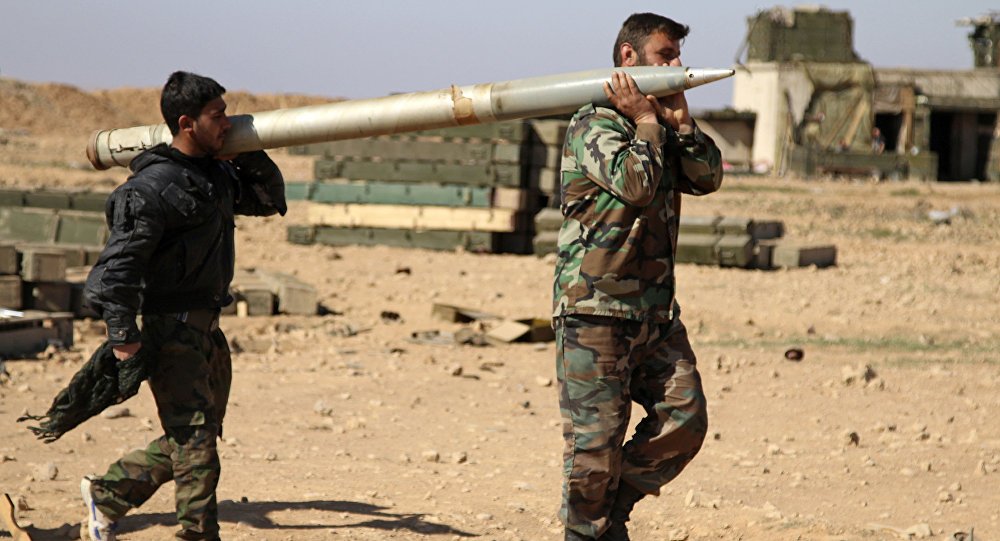
Syrian Army Forces

Monday, May 23, 2016

US negotiating agreement with Libya that could send US troops to Libya

Marine General Joseph Dunford, chair of the U.S. Joint Chiefs of Staff, says the Libyan Government of National Accord (GNA) is negotiating an agreement that could see U.S. military advisers deployed there to help fight the Islamic State (IS).

There are already special forces from France, Jordan, the UK and the U.S. present in Libya. The U.S. is said to have "outposts" near Misrata and Benghazi helping out against the IS. Speaking to a handful of journalists after returning to the U.S. from Brussels, he said:
“There’s a lot of activity going on underneath the surface. We’re just not ready to deploy capabilities yet because there hasn’t been an agreement. And frankly, any day that could happen.”

General Dunford said the mission is likely to focus on training and equipping militias who are loyal to the GNA government. There is no agreement yet on who exactly will be involved and there are already divisions about how the military aid should be delivered:Britain would like to see the training of personnel take place in Libya itself, whereas Germany is adamant training should be conducted over the border in Tunisia.Dunford emphasized that a request was needed from the new government before any troops were sent. He said any mission to Libya was expected to be long term. So far the GNA has been asking for weapons and equipment rather than troops.
General David Rodriguez, who heads the U.S. Africa Command, said Washington is considering sending weapons to Libya to help in the fight against the Islamic State. He said that the U.S. would need to take its clues from the GNA in order to ensure that weapons went to militia loyal to it. He said:
“We’re really dependent on the Government of National Accord to figure out who is with them and who is moving over toward them. Those are some of the things you can really only understand by watching how the GNA operates and how the different militias operate, whether it’s the Misratas, the Zintans or anybody else.”
John Kerry and other diplomats said they were in favor of granting any GNA request for an exception to the UN embargo. This move will no doubt anger the rival House of Representatives (HoR) based in Tobruk and also General Khalifa Haftar, the commander-in-chief of the Libyan National Army (LNA) associated with the HoR. However, Haftar has been getting weapons and equipment from some Arab states, including the UAE, in spite of the embargo. Rodriguez said that "everybody" is waiting to see what the UN will decide on the request. The request must stipulate who will receive the weapons. Rodriguez said: “The support for the GNA and how they need it and how they want it, we’ll just have to see how that develops over time.”
The structure of any Libyan mission is uncertain. It was thought that the Italian government would take the lead. However, Italian Prime Minister Matteo Renzi, ruled out any large "invasion" of Libya and there are reports he was backing out from deploying troops to support a UN mission. General Dunford spoke to Italian defense chief, General Claudio Graziano about the issue, who said that he did not think Italy would back out. He said the Italian government was still planning the mission but also setting conditions for getting involved. This would include the GNA requesting the intervention and also specifying who should be trained. There should also be demonstrated international support that could include a UN Security Council mandate.
Sending troops to Libya is bound to convince even more Libyans that the GNA is basically a UN-imposed government meant primarily as a means to meeting international wishes such as the defeat of the Islamic State and control of immigrants from Libya to Europe. Providing the Libyans themselves with weapons and equipment to fight the Islamic State may cause less political backlash but it is still dangerous because militia groups may very well sell some of the weapons or alternatively they are captured by the Islamic State. Worse still, they could be used in a conflict between the forces of General Haftar and many militia supporting the GNA .Haftar regards them as terrorists and his enemies. The enmity is mutual.

Friday, February 5, 2016

Rome meeting reveals several countries contemplating action against Islamic State in Libya

Officials from 23 different countries are meeting in Rome to review the fight against the Islamic State (ISIS or Daesh) in Syria, Iraq and also In Libya.

In Libya the Islamic State has a base in the city of Sirte and along the coast east and west of the city. It has even attacked the oil facilities at Ras Lanuf and El Sidra as well as blowing up a pipeline recently. It has also launched devastating suicide attacks. John Kerry, the US Secretary of State said at the Rome conference:
"In Libya, we are on the brink of getting a government of national unity. That country has resources. The last thing in the world you want is a false caliphate with access to billions of dollars of oil revenue."Actually, IS has not occupied any of the oil export ports but attacks them and set oil tanks on fire, and has also blown up pipelines. This hardly is a way of generating revenue. Their strategy is to prevent their enemies from gaining oil revenue rather than seeking it themselves. Kerry notes that the U.S.-led coalition mounting airstrikes on the Islamic State still have not achieved victory while "Daesh," as he calls the Islamic State, is being created and gaining a foothold in other countries such as Libya. He might have mentioned Yemen and Afghanistan as other countries where the Islamic State is beginning to operate.
Western nations are also considering intervention in Libya, but would like to legitimize the intervention through being asked to intervene by the new UN-brokered Government of National Accord(GNA). However, the GNA still has to be approved by the internationally-recognized House of Representatives(HoR) before its term begins. So far the HoR has refused to approve the GNA. They met four times without achieving a quorum and when they did finally reach a quorum they demanded the cabinet size of the GNA be reduced. They also demanded that a section of the Libyan Political Agreement, upon which the GNA is based, have an article deleted that would give the function of commander in chief of the Libyan National Army (LNA) to the senior officials of the GNA, the presidency council. The present commander in chief of the LNA, General Khalifa Haftar, refuses to give up his position and he appears to have majority support within the HoR for keeping his job. It may be some time before there is an effective GNA although Kerry claims that its formation is imminent. Members of the GNC who signed on to the LPA vehemently oppose Haftar.
Even if there is some deal worked out with Haftar and he allows the HoR to approve the GNA, the rival government in Tripoli, the General National Congress and its armed forces, have not agreed to allow the GNA to set up shop in Tripoli where the UN insists the GNA should be located. One prime reason the UN wants the government there is so that the GNA can have control over the Libyan Central Bank and the National Oil Company. Once the GNA gains control of those institutions it can starve the GNC of funds. If the HoR tried to carry on as a separate government the same thing could happen to it. However, the HoR is the legislative body of the new GNA and so it is unlikely to try to continue as a separate government.
The international community appears to be already involved militarily in Libya. Special forces troops from several countries, including the UK and US, are reported to have landed in eastern Libya. The US is already planning a third front against the Islamic State in Libya. No doubt these plans are being discussed at the Rome meeting.
If the UN-brokered government fails to be formed, western nations may simply co-operate with General Haftar who might approve military intervention as long as he is in control, although he claims that he does not want foreign intervention through the GNA. There have already been airstrikes against IS positions in Sirte by unidentified planes. Reporters don't seem to have much curiosity as to where they might be from. Perhaps some countries may begin a more extensive campaign of airstrikes as has been done in Iraq and Syria. The U.S.-led coalition did not bother to get government permission in Syria. If they cannot find anyone to ask them into Libya, they can simply go ahead in any event as a form of self-defense in the war on terror. That will always work.

Saturday, December 26, 2015

UN Security Council for LPA could facilitate foreign intervention in Libya

Today, the UN Security Council passed a resolution supporting the Libya Political Agreement (LPA) together with the associated Government of National Acoord (GNA).Several articles now suggest the GNA will ask for foreign aid in fighting the Islamic State.

The Guardian notes that while the UN resolution is intended to give support to the GNA, it could also pave the way for potential military intervention against the Islamic State. The GNA could request such intervention. The UN resolution was sponsored by the UK. Britain has already reported that it is ready to send 1,000 troops but the RAF could make bombing runs sooner. Perhaps there could be more bombings by mystery planes as happened over the IS-controlled city of Sirte at the end of October.The mass media did not bother to investigate whose planes they might have been. The Guardian claims no parliamentary approval would be required for the UK to send troops since they would go at the invitation of the Libyan GNA. An RT article also argues the UN resolution will facilitate the sending of foreign troops to Libya.
While the Libyan ambassador to the UN, Ibrahim al-Dabashi, told the news outlet Asharq Al-Awsat that he expected airstrikes soon, he gave no timeline. He cited the U.S., UK, France and Italy as countries preparing for strikes. Dabbashi said that UN resolution 2214 gave clear authorization for a military strike. “[It] asks all countries to fight terrorism in Libya, which represents a clear-cut authorisation only requiring of different countries to inform the government in Libya in advance, and coordinate with it." However, the GNA needs to be approved by the HoR and will probably not take power until about the middle of January. A source in the senior Foreign Office said that there would be no contribution of combat troops and the UK was not at the current time considering air strikes.
The narrative Dabbashi gave Reuters was quite different. As of now, Dabbashi is still representing the Al-Thinni House of Representatives (HoR) internationally-recognized government in Tobruk, not the GNA which still does not exist.Some readers might not realize this due to the manner of reporting on the issue and the fact that the UN has acted as if its existence was just a matter of time, since long before the signing of the LPA on December 17. There have been several meetings to coordinate aid for the GNA and the prime minister designate Serraj has for a long time been visiting foreign capitals. Dabbashi told Reuters that Libya has no intention of requesting Western air strikes against the Islamic State anytime soon. He is speaking for a government that is supposed to dissolve come the middle of January when the GNA takes over although the HoR will remain as a re-legitimized legislature for the GNA. He can hardly speak for what the GNA might do. Certainly the international community is expecting the GNA to give approval for intervention.
What Dabbashi wants is for the UN to lift the arms embargo against Libya. This would give more power to Khalifa Haftar the armed forces commander of the HoR government. He is fighting not just against the Islamic State but also the militia of the rival General National Council(GNC) goverment, forces he considers Islamist terrorists. Dabbashi said: "No one is thinking about requesting foreign intervention at the moment. We are willing to fight ISIS (Islamic State) ourselves. I always said that we need to strengthen our capabilities, our capability to fight ISIS on the ground."Once the GNA is established, it will be the sole recognized Libyan government. The present government in Tobruk will supposedly be dissolved and the HoR will survive only as the legislature of the new GNA. The function of commander in chief of the Libya National Army will be carried out by senior officials of the GNA not the present commander Khalifa Haftar.
For some reason there has been no announcement of when the HoR will meet to give a vote of confidence in the GNA. Until this happens, the GNA cannot really function and its term is set to be begin from that date according to the last version posted of the LPA. The latest version that was signed on December 17 at Skhirat has not been released on the United Nations Support Mission in Libya (UNSMIL) website. Perhaps there are changes the UN would not like to reveal to the public. Those from the HoR who agreed to sign the LPA also earlier issued a statement indicating that they supported it only on condition that Haftar keep his job. It will be interesting to see if the HoR demands that Haftar keeps his position in return for their giving a vote of confidence in the GNA. Somehow the UN does not want to talk about this issue or the coming drama in the HoR when the vote of confidence issue comes up.


Sunday, December 20, 2015

Rome ministerial meeting supports signing of Libya Political Agreement

Foreign ministers from 17 countries and four international organizations wrapped up a meeting today in Rome with a statement supporting the UN-brokered Libyan Political Agreement(LPA), which also sets up a Government of National Accord(GNA).

John Kerry was a co-chair of the meeting along with Italian Foreign Minister Paolo Gentiloni. All the participants expressed their willingness to cooperate with the GNA, which has yet to be formed or even agreed to. Someone or other, it is not yet clear who, is supposed to sign the LPA as of December 16. So far over several months neither parliament has signed the deal. All along, the UN has acted as if there were no question of the GNA coming into being. The senior officials named by the UN as part of the GNA have had talks with international officials from various countries and there have been several meetings to discuss mechanisms for delivering aid to the GNA. The fact that neither of the two rival governments have approved of the GNA is neither here nor there. The UN is going ahead regardless. The Tunis meeting of dialogue members, no doubt chosen because they approve the LPA, gave the appropriate veneer of legitimacy to the UN-sponsored LPA by agreeing to it and setting a date for signing it. This was followed by another stage of legitimizing the process when Kobler got the support of the UN Security Council. Today we have the final blessing by a huge gathering of international officials in Rome.
There is extensive coverage of the meeting by the BBC and the Guardian as well as VOA.among many others.
The BBC reports: "US Secretary of State John Kerry said he expected Libya's rival governments to sign a UN-backed agreement on Wednesday to form a unity government."Amazing that Kerry should say this. Neither the GNC nor the HoR have yet approved the LPA and there is no sign at all that Kobler intends to get their signature. The GNC has rejected the whole process going back to the Tunis meeting. The BBC report also says:Delegates from the two opposing administrations were at the talks in Rome, along with members from Western and Middle Eastern countries and the UN.It is not clear that these are "delegates" in the sense they were chosen by the rival governments. The presidents of both the rival governments support the alternative to the UN plan, the Libya-Libya agreement. The BBC continues with a statement which is an outright falsehood:
The rival governments agreed at talks in Tunis two days ago to sign the UN-backed political agreement on Wednesday, and Mr Kerry said he expected that to go ahead.
This is astonishing. What happened at Tunis was that Kobler gathered together select members of the Libya dialogue, including some from both the HoR and the GNC. That group approved the LPA. Neither government did so and there has been no meeting to vote on the issue.
Many of the reports on the Rome meeting consist of statements by select officials about their support of the LPA and the threat of the Islamic State in Libya, which makes a speedy setting up of the GNA imperative. There are a few who bring up very troubling issues. Mattia Toaldo, a policy expert at the European Council of Foreign Relations in London, said it was not known whether the two parliaments as a whole will go along with the deal. He also wondered whether the new government would be able to sit in Tripoli because there might not be any security. As I see it, the UN is going ahead whether the two parliaments go along or not. There is no mention by Kobler that either parliament needs to sign. The GNC has rejected the UN meeting in Tunis and warned the UN that Al-Makzhoum the GNC member who signed the LPA was not authorized to do so or to announce the agreement, and was not even a member of their negotiating committee. He is not authorized to sign on Wednesday.
Emma Bonino, a former Foreign Minister of Italy, and Jean-Marie Guéhenno, the president and CEO of International Crisis Group, the independent conflict-prevention organization, also note the head of the GNA will be Faez Serraj, a little-known politician prior to his nomination by the UN to head the GNA. In fact his name was not suggested by the HoR. The GNC did not submit any names. The two suggest security conditions will prevent the GNA meeting in Tripoli. Actually it is not clear the GNA could meet anywhere in Libya under control of the forces of the GNC or the HoR since both the Libya Dawn militia and General Khalifa Haftar, commander of the HoR Libya National Army, reject the LPA. Haftar considers the forces of the rival GNC Islamist terrorists and refuses to negotiate with them or agree to a ceasefire. It is not clear who if anyone will pay the least attention to the ceasefire call from the Rome meeting. Haftar wll agree to it but on condition that he continue with the war against Islamic terrorism. He will go on with his Operation Dignity meant to clear Libya of Islamists that he started back in May 2014.
The two authors suggest any attempt to locate the GNA in Tripoli could result in faction-fighting in Tripoli for control of the capital. They also point out the GNA might have little influence in the east, where there is significant opposition to the UN deal and that the GNA could fuel secessionist settlement there. It is General Khalifa Haftar and allies in the east who represent the significant opposition to the GNA.
The previous UN envoy, Leon, said several times that any LPA is unenforceable without a parallel military agreement. Leon had no success in his own attempts to progress on this front. All he did was take advantage of a split in the GNC-linked militias and get some of them to sign on to the LPA. Since the Tunis meeting, the GNC has clearly denounced what has happened and disassociated itself from the UN process. From the HoR side there has been virtual silence even though the president of the HoR has so far opposed the LPA and supported the rival Libya-Libya plan. There are no reports as to what Haftar thinks of what is happening, even though he rejects the LPA. Meanwhile countries such as Egypt, Jordan, and the UAE all support the LPA now but they also support Haftar. These two positions are inconsistent. Perhaps there are deals being made behind the scenes we know nothing about. There may be some arrangement being made with Haftar that has prevented him from acting so far to disrupt the UN push for the LPA or even speak out against it. As events unfold what is actually happening may become clearer. It seems difficult to believe that the UN and international community would go ahead without some idea as to what the security situation would be for their new government.


Saturday, November 28, 2015

John Kerry, US Secretary of State, visits UAE and promises joint action on Libya

United States Secretary of State, John Kerry, met on November 23 with United Arab Emirates(UAE) Foreign Minister Abdullah bin Zayed Al Nahyan. Kerry will visit Israel and Palestine as well.
Kerry will be discussing Syria and other crises in the Middle East. In the UAE he talked to the foreign minister about the situation in Libya. A new UN Special Envoy to Libya has just taken over from the former Special Envoy, Bernardino Leon. Leon worked for almost a year to draft a final Libya Political Agreement(LPA) and proposed names for a Government of National Accord. Neither the internationally-recognized House of Representatives(HoR) parliament based in Tobruk nor the rival General National Congress(GNC) have approved or even voted on the LPA. Leon left the UN position under a cloud as he was in a blatant conflict of interest situation.
While acting as a supposedly impartial mediator between the two rival Libyan governments, Leon accepted last June a job in the UAE that paid over $1,500 a day. Leaked emails also show he consulted with and even took direction from the UAE. The UAE is a strong supporter of the HoR government and its chief military commander, Khalifa Haftar. The UAE is also accused of shipping arms to the HoR and Haftar in violation of a UN ban on weapons shipments to Libya. The UAE was accused by the U.S. of clandestinely bombing Tripoli last year with the help of Egypt.
Kerry said the United States together with the UAE would take steps soon to address the situation in Libya:“We also talked very seriously today about Libya, and we are committed to taking steps in the next weeks, months to try to address that situation,”Kerry makes no mention of the LPA that many foreign countries and the UN have pressured the two rival governments to sign. Mystery planes bombed Islamic State positions in the city of Sirte recently. No one seems to have followed up to find out whose planes they might have been. Neither of the two rival governments claim responsibility. Perhaps the U.S. will join in with the UAE in bombing Sirte. The U.S. recently attacked Islamic State positions outside of Derna and claim to have killed an Islamic State leader although the IS denies that the leader was killed.
The new UN envoy to Libya, Martin Kobler, has had talks with both rival governments urging them to sign on to the agreement. The French Defence Minister along with many others also urge signing of the agreement and warn that not to do so would be a victory for the Islamic State. The Islamic State main base now is in the city of Sirte and area. Contrary to numerous reports, there is little evidence that it is gaining much if any territory. In fact it has lost what was long its main base and stronghold the city of Derna. The Italian Minister for Foreign Affairs and International Cooperation also urged the signing of the agreement when he met Kobler.
There are no reports yet as to when the two parliaments will meet again to vote on the LPA. Kobler has insisted the agreement cannot be amended even though the GNC requested amendments and the HoR claims the draft is not acceptable as it is. There is not even discussion of any parallel military dialogue to ensure that there is a ceasefire and disarmament. Without this the implementation of any political agreement will be impossible.


Saturday, November 21, 2015

John Kerry claims it will take a much shorter period to "neutralize" the Islamic State than it did for Al Qaeda

U.S. Secretary of State John Kerry told reporters the United States would be able to "neutralize" the Islamic State or Daesh much more quickly than it was able to do so with Al-Qaeda.
Kerry told reporters:"We began our fight against al-Qaida in 2001 and it took us quite a few years before we were able to eliminate Osama bin Laden and the top leadership and neutralize them as an effective force. We hope to do Daesh much faster than that and we think we have an ability to do that,"Al-Qaeda hardly seems neutralized. Al-Qaeda-linked groups are still quite active in many parts of the world including AQAP or Al-Qaeda in the Arabian Peninsula that has advanced considerably in Yemen since the Saudi-led mission against the Houthi. The Al-Qaeda-linked Al Nusra Front in Syria is one of the key rebel groups fighting against the Assad regime and also Daesh.
Wikipedia outlines the development of Daesh, ISIS, ISIL, or Islamic State(IS) from an Al-Qaeda-linked group in Iraq: The group originated as Jama'at al-Tawhid wal-Jihad in 1999, which pledged allegiance to al-Qaeda in 2004... In January 2006, it joined other Sunni insurgent groups to form the Mujahideen Shura Council, which proclaimed the formation of the Islamic State of Iraq (ISI) in October 2006. After the Syrian Civil War began in March 2011, the ISI, under the leadership of al-Baghdadi, sent delegates into Syria in August 2011. These fighters named themselves Jabhat an-Nuṣrah li-Ahli ash-Shām—al-Nusra Front—and established a large presence in Sunni-majority areas of Syria...In April 2013, al-Baghdadi announced the merger of the ISI with al-Nusra Front and that the name of the reunited group was now the Islamic State of Iraq and the Levant (ISIL). However, Abu Mohammad al-Julani and Ayman al-Zawahiri, the leaders of al-Nusra and al-Qaeda respectively, rejected the merger. After an eight-month power struggle, al-Qaeda cut all ties with ISIL on 3 February 2014, citing its failure to consult and "notorious intransigence".
In one form or other the U.S. has been fighting what is now Daesh since 2004 at least already over a decade. The Islamic State as such came into existence only in 2013. It obviously had a long period of growth as part of Al-Qaeda. No doubt Kerry will want to begin counting from 2013 when he counts how long it takes to "neutralize" Daesh. Nevertheless Kerry continued to be upbeat:"President Obama has already ordered increased efforts. He has been doing that before the Paris attacks, over the course of the last months -- increased efforts, and we are seeing the results of those in ways,and I am confident that if we stay steady, keep our heads in thinking creatively, but also being strong and committed to our fundamental values, we are going to defeat Daesh."
Kerry's view contrasts with the view of retired General John Allen, Obama's envoy to the global coalition battling Daesh, who said at a forum in Doha, Qatar:“This will be a long campaign. Defeating Daesh’s ideology will likely take a generation or more. But we can and we must rise to this challenge. In an age when we are more interconnected than at any other time in human history, Daesh is a global threat.”Allen said even though he had served many years as a U.S. marine, he had never seen the types of depravity and brutality that Daesh practiced and even celebrated. He noted Daesh had lost some ground in Iraq and was weakened by airstrikes.
Richard Barrett, a former senior intelligence officer in the UK M16 intelligence agency, also held that the struggle against Daesh would take many years, perhaps generations. Barnett says that air strikes will not eliminate Daesh. While it is imaginable that attacks could weaken Daesh so much they might need to go underground, Barrett claims this would not really neutralize them:"But the idea that ISIL thrives on - the idea behind ISIL - I don’t think is going to be defeated any time soon at all, that requires much more work and a much longer term, much more generational-type struggle."Barrett claimed, as well, that the whole point of attacks such as that in Paris is to polarize society. Barrett agreed there was a very clear link between the invasion and occupation of Iraq and the rise of Daesh. Air strikes in Syria, he said, would not stop Daesh attacks in France or elsewhere and might not even reduce its capacity for attacks. Kerry appears wrong in claiming that Al-Qaeda has been neutralized and also in claiming that Daesh will be neutralized any time soon.


US Secretary of State optimistic about Syria ceasefire

 John Kerry, US secretary of state, has given a positive assessment of efforts to negotiate a ceasefire between rebels aiming to overthrow Assad and his forces. Kerry claimed a ceasefire could be just weeks away.
Kerry claimed an agreement Saturday in Vienna for a ceasefire and talks between the Assad government and opposition groups would aid the international campaign against the Islamic State, a campaign made more urgent by the Paris attacks. The agreement in Vienna sets the date for a ceasefire much further in the future: The US, Russia, Britain, France, Iran and Saudi Arabia signed a statement supporting a 1 January deadline for the start of talks between the Syrian government and opposition, with the aim of agreeing a ceasefire by 14 May.There was no agreement on the status of Assad himself.
Nevertheless Kerry said of the Vienna agreement:“That’s a gigantic step. If we can get that done, that opens up the aperture for a whole bunch of things. We’re weeks away conceivably from the possibility of a big transition for Syria, and I don’t think enough people necessarily notice that. But that’s the reality.”Nineteen countries signed on to the agreement including rivals such as Iran and Saudi Arabia. Elections would be held a year after the ceasefire agreement. No Syrians were at the Vienna meeting.
Jordan was given the task of drawing up a list of the Assad opposition groups who would be eligible to participate in negotiations. Not surprisingly, the Islamic State is barred from negotiations. However, Jabhat al-Nusra, a significant force among the anti-Assad rebels, will also be excluded due to its links to Al-Qaeda. There are a number of groups supported by Turkey, Saudi Arabia, as well as other Gulf States who work closely with Jabhat al-Nusra and may not be willing to abandon the group by giving up the battle against the Syrian regime.
Since the Vienna agreement leaves the status of Bashar al-Assad in limbo, many opposition groups may be unwilling to participate in talks. The western-backed Syrian National Opposition said it would not participate in talks unless there were guarantees that Assad would go. Opposition groups also worried that the vetting process could exclude other important but radical Islamist groups such as Ahrar al-Sham.
Forty different rebel groups, in a joint statement, blame Assad for the Paris attacks and hold him responsible for the creation of the Islamic State. In contrast, Assad, in a meeting with French MPs in Damascus on Saturday, blamed the attacks on French policy saying: “The question that is being asked throughout France today is, was France’s policy over the past five years the right one?The answer is no.”France has made it clear it continues to support the opposition view that Assad must go for there to be a political settlement.


US will bank Tik Tok unless it sells off its US operations

  US Treasury Secretary Steven Mnuchin said during a CNBC interview that the Trump administration has decided that the Chinese internet app ...