Showing posts with label Syria civil war. Show all posts

Friday, September 23, 2016

US Russia cease fire agreement caused tension between State Dept. and Pentagon

The deal between Secretary of State John Kerry negotiated with Russia for a ceasefire in Syria has increased the tension between Kerry and Defense Secretary Ashton Carter.

The cease-fire agreement took effect at sundown last Monday. Although violence has been reduced, there have been a number of violations and problems. The situation was not improved by Assad saying he intended to recapture all areas of Syria.
Carter had been one of several administration officials who argued against the agreement in a conference call with the White House that included Kerry. President Obama eventually approved the agreement after a long debate. However, Pentagon officials were not convinced. Pentagon officials would not even agree to the proposal that if violence ceases for a week, the next day the U.S. and Russia would share information on Islamic State targets in Syria. Lt. Gen. Jeffrey Harrigian, commander of the United State Air Forces Central Command said: “I’m not saying yes or no. It would be premature to say that we’re going to jump right into it.” However even the White House press secretary expressed doubts: “I think we’d have some reasons to be skeptical that the Russians are able or are willing to implement the arrangement consistent with the way it’s been described. But we’ll see.”
Kerry wants the U.S. to do everything possible to keep Assad from bombing civilians. He hopes that the agreement will keep Assad from such bombings. Kerry has had success dealing with the Russians before. Just two years ago on Sept. 14 he negotiated a surprise agreement with Sergei Lavrov to eliminate Assad's chemical weapons. The agreement does not include chlorine which appears to have been used recently. Kerry was also successful in negotiation of a nuclear deal with Iran against much opposition from many U.S. politicians However, in spite of many attempts, he failed to revive Middle East peace talks.
Apparently Kerry himself believes the deal may not work but he is determined to try anyway because it is so important to relieve some of the suffering and stop the violence that has taken about half a million lives already. The problem is that neither side may be able to adequately control Assad or some of the rebel groups. Already, UN trucks with aid for Aleppo were stuck at the Turkish border awaiting permission from the Assad government to enter Syria.
Kerry's positive negotiations and cooperation with Russia are happening in a climate in which the U.S., especially the military, takes a very combative stand against Russia on issues such as Crimea and the rebels fighting in eastern Ukraine. The U.S. military is not vey anxious to share intelligence with a country that it increasingly considers an adversary.
Gen. Philip Breedlove, who was until recently NATO's supreme allied commander said:“I remain skeptical about anything to do with the Russians. There are a lot of concerns about putting out there where our folks are.” A measure of the sensitivity of the agreement is that the State Department has not released the text of the agreement or even a fact sheet summarizing it.
It remains to be seen whether the cease-fire holds for seven days. No doubt there will be numerous violations even if it holds. If both sides agree the cease-fire held then the U.S. and Russia are to begin to share intelligence on targeting the Islamic State and Jabhat Fateh al-Sham, formerly the Al-Qaeda-linked Al-Nusra Front. The U.S. military worries that any such sharing would reveal information about U.S. tactics and intelligence gathering methods.

Monday, June 20, 2016

Over 50 US State Dept. diplomats want US to strike Assad forces in Syria

More than 50 U.S. State Department diplomats signed an internal memo that is critical of the Obama administration policy in Syria.

In the memo, the diplomats urge Obama to carry out military strikes against the forces of President Bashar al-Assad to stop what the diplomats claim are persistent violations of the cease-fire in the civil war that has lasted five years already.

A draft of the memo was obtained by the New York Times from a State Department official.

The draft claims that U.S. policy has been "overwhelmed" by unrelenting violence in Syria and calls for "a more judicious use of stand-off and air weapons which would undergird and drive a more focused and hard-nosed U.S.-led diplomatic process."

Such a move would no doubt result in an increased confrontation with Russia and would represent a radical shift in U.S. policy which is at present emphasizing the battle against the Islamic State rather than the overthrow of the Assad regime. However, diplomatic attempts to end the conflict led by Secretary of State, John Kerry are on the verge of collapse.

The dissent was filed  in the State Department "dissent channel". The channel was set up during the Vietnam War so that employees could register disagreements with policies without any fear of reprisal. Filings are relatively common but this dissent has an unusually high number of signatures. The signatures on the filing are almost all of mid-level working officials. There are no well-known higher officials on the list but it is known that many share the concerns expressed in the dissent.

Kerry himself has suggested there be a stronger U.S. response in Syria to force Assad into a diplomatic solution. Obama has resisted such pressure and been backed up by military commanders who fear the result should Assad lose power. John Kirby, the State Department spokesperson declined to comment on the memo, but said Kerry respected the process.

Robert Ford former US ambassador to Syria said: “Many people working on Syria for the State Department have long urged a tougher policy with the Assad government as a means of facilitating arrival at a negotiated political deal to set up a new Syrian government.” Ford resigned from the Foreign Service over the administration's policy on the conflict. The officials who signed the memo denied that they  were advocating a "slippery slope that would end in a military confrontation with Russia". They insist there must be credible threat of military action to keep Assad in line. The threat should be followed by negotiation.

Obama's policy in Syria has been designed to avoid further military entanglement in the civil war. It has been described as risk-averse.

However, the U.S. is aiding Kurdish-led forces against the Islamic State. Attempts to aid moderate rebels previously have not been successful.

The U.S. administration  shows no sign it was willing to consider military strikes against Syrian President Bashar al-Assad's forces as the memo suggests.
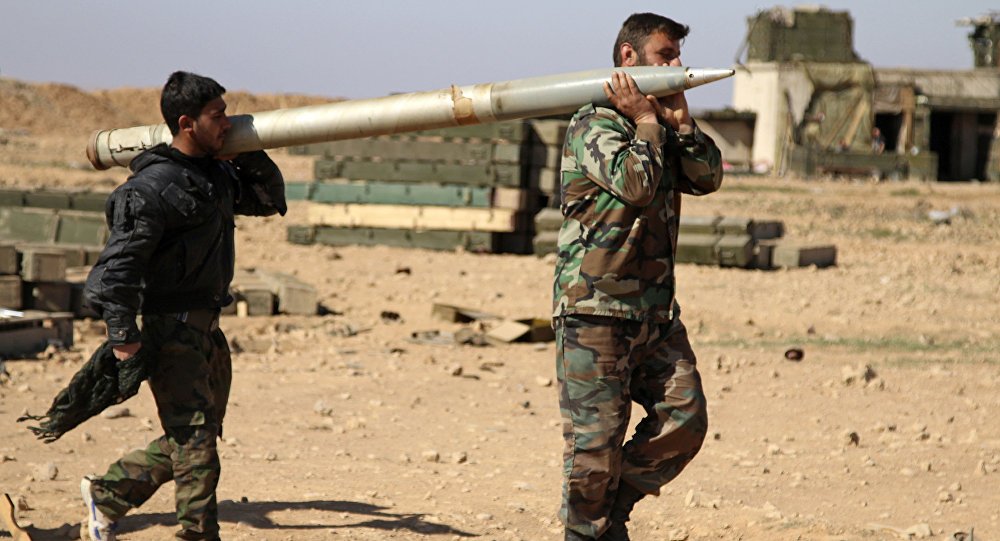
Syrian Army Forces

Saturday, November 21, 2015

US Secretary of State optimistic about Syria ceasefire

 John Kerry, US secretary of state, has given a positive assessment of efforts to negotiate a ceasefire between rebels aiming to overthrow Assad and his forces. Kerry claimed a ceasefire could be just weeks away.
Kerry claimed an agreement Saturday in Vienna for a ceasefire and talks between the Assad government and opposition groups would aid the international campaign against the Islamic State, a campaign made more urgent by the Paris attacks. The agreement in Vienna sets the date for a ceasefire much further in the future: The US, Russia, Britain, France, Iran and Saudi Arabia signed a statement supporting a 1 January deadline for the start of talks between the Syrian government and opposition, with the aim of agreeing a ceasefire by 14 May.There was no agreement on the status of Assad himself.
Nevertheless Kerry said of the Vienna agreement:“That’s a gigantic step. If we can get that done, that opens up the aperture for a whole bunch of things. We’re weeks away conceivably from the possibility of a big transition for Syria, and I don’t think enough people necessarily notice that. But that’s the reality.”Nineteen countries signed on to the agreement including rivals such as Iran and Saudi Arabia. Elections would be held a year after the ceasefire agreement. No Syrians were at the Vienna meeting.
Jordan was given the task of drawing up a list of the Assad opposition groups who would be eligible to participate in negotiations. Not surprisingly, the Islamic State is barred from negotiations. However, Jabhat al-Nusra, a significant force among the anti-Assad rebels, will also be excluded due to its links to Al-Qaeda. There are a number of groups supported by Turkey, Saudi Arabia, as well as other Gulf States who work closely with Jabhat al-Nusra and may not be willing to abandon the group by giving up the battle against the Syrian regime.
Since the Vienna agreement leaves the status of Bashar al-Assad in limbo, many opposition groups may be unwilling to participate in talks. The western-backed Syrian National Opposition said it would not participate in talks unless there were guarantees that Assad would go. Opposition groups also worried that the vetting process could exclude other important but radical Islamist groups such as Ahrar al-Sham.
Forty different rebel groups, in a joint statement, blame Assad for the Paris attacks and hold him responsible for the creation of the Islamic State. In contrast, Assad, in a meeting with French MPs in Damascus on Saturday, blamed the attacks on French policy saying: “The question that is being asked throughout France today is, was France’s policy over the past five years the right one?The answer is no.”France has made it clear it continues to support the opposition view that Assad must go for there to be a political settlement.


Wednesday, September 23, 2015

Commander of IS forces in Syria once worked under US-backed Free Syrian Army

While the U.S. emphasizes that it does not support radical jihadists in Syria, it actually supported a group of Chechen jihadists led by Omar al-Shishani or Tarkhan Tayumurazovich Batirashvili, who now commands the Islamic State forces in Syria.
Abu Omar al-Shishani was first trained by the U.S. as part of an elite Georgian army unit and served until 2006. He was involved in the Georgian conflict with Russia.
Al-Shishani later moved from Georgia and ended up in Syria with a group of Chechen jihadists fighting against the Assad regime. In August 2013 Al Shishani and his jihadist group were instrumental in capturing the Menagh air base that had resisted rebel attacks for 10 months previously:This week, the jihadist group Jaish al-Muhajireen wal Ansar, or the Army of Emigrants and Supporters, led by a fighter from the Caucasus known as Abu Omar al-Shesheni — the Chechen — worked with Free Syrian Army battalions to take the Menagh air base in Aleppo Province after 10 months of trying.Two of his jihadist members drove a Vehicle Borne Improvised Explosive Device on a suicide mission into the base killing many of the remaining defenders.
At the time of this attack, the Revolutionary Council of Aleppo was the command structure officially sanctioned and supported by the US and UK. The Council was headed by Free Syrian Army Colonel Abdul Jabbar al-Okadi described by the press as the main recipient of western aid. After the Menagh Base was taken, Colonel al-Okadi appeared in a video alongside Abu Jandal a leader of the Islamic State in Iraq and Syria(ISIS):The group singled out for praise in the video, Jaish al-Muhajireen wal Ansar, was precisely Omar Shishani’s own brutal Chechen group (“Army of Emigrants and Helpers”) which turned the tide of the battle. Most significant about FSA Col. Okaidi himself, clearly the operational head of this jihadi “basketball team,” was that he had been paid a personal visit by his State Department patron, Ambassador to Syria Robert Ford, just months prior to the final victory at Menagh.
This shows at one time that the FSA and the Islamic State fought alongside each other under command of the US-supported FSA.
Ford admitted that rebels funded by the U.S. State Department included ISIS. He told a McClatchy reporter he had called Oakaidi to tell him cooperation with Shishani and his jihadists was "extremely unhelpful, extra unhelpful." What it shows is that even rebels supported by the U.S. have a quite different agenda than the U.S. They care less about how radical the groups are they ally with as long as they are helpful in fighting Assad. Rebels of every stripe were horrified and angered when the U.S. bombed the Al-Qaeda-linked Nusra Front. The only reason rebels fight the Islamic State is that IS has attacked them.
You would think that Okaidi's relationship with the U.S. would end with the IS episode but in July 2015 Okaidi was interviewed on CNN by Christiane Amanpour appealing for a US no-fly zone in Syria to support moderate rebels. In a recent poll by ORB international 82 percent of Syrians blamed the U.S. for the growth of ISIS. This would not be the first time the U.S. had encouraged jihadists only to suffer blowback. The CIA funded jihadists in their successful campaign against the Soviet-backed regime in Afghanistan including one well-known jihadist by the name of Osama Bin Laden. As with Bin Laden, Shishani became a wanted terrorist.
Shishani was added to the US Treasury Department's list of Specially Designated Global terrorists on September 24th 2014. On May 5 2015 the U.S. State Department Rewards for Justice Program announced that a reward of up to US $5 million is offered for information that could lead to his capture. The appended video purports to show an attack by the FSA on the Islamic State led by an Al-Qaeda-linked Nusra Front commander just in August.


US will bank Tik Tok unless it sells off its US operations

  US Treasury Secretary Steven Mnuchin said during a CNBC interview that the Trump administration has decided that the Chinese internet app ...